
21/03/2026




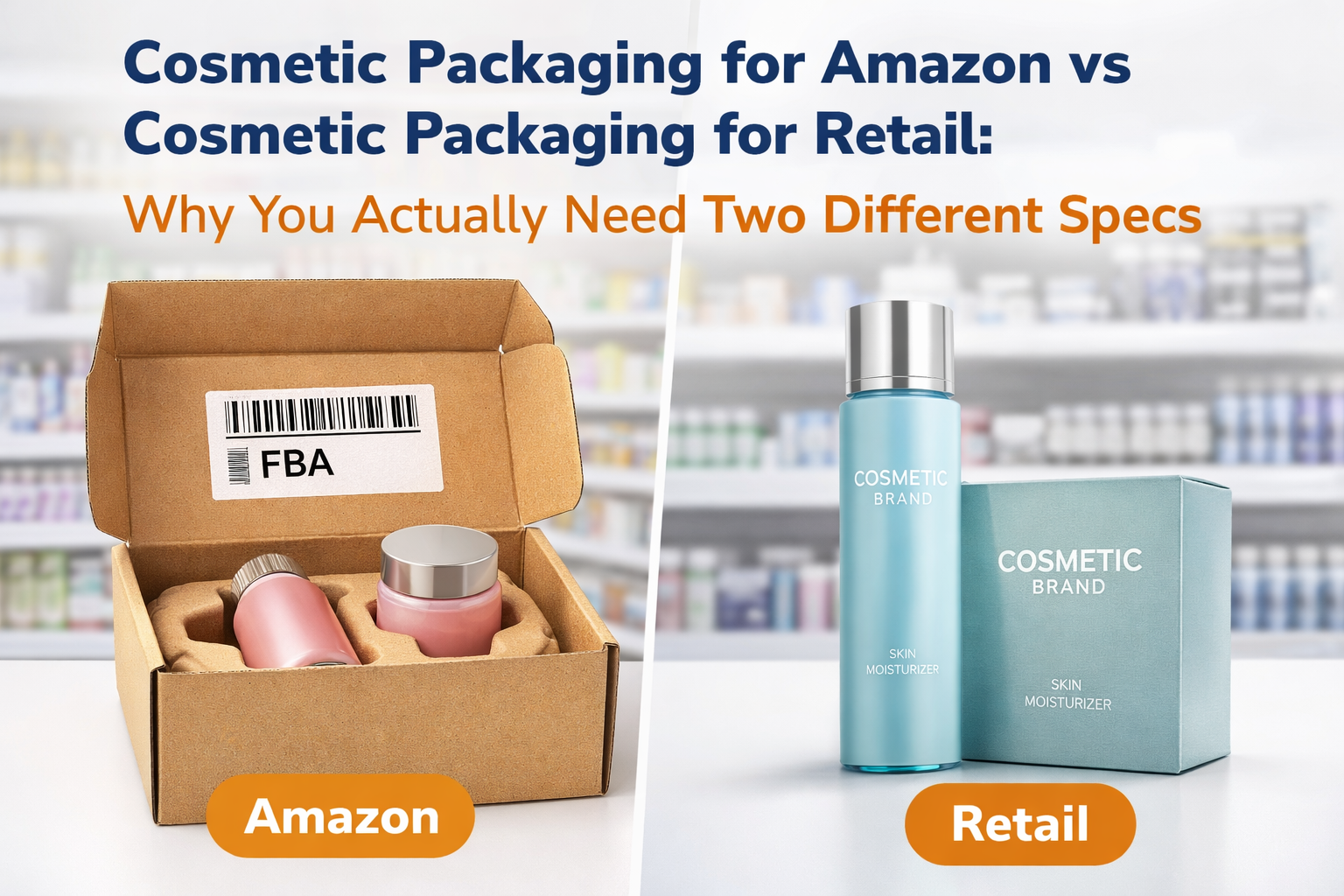
For cosmetic brands, packaging is often designed with a strong focus on visual appeal and brand identity. However, as more brands expand into e-commerce platforms like Amazon while maintaining retail presence, a common mistake begins to surface: using the same packaging specifications for both channels.
At first glance, it may seem efficient to standardize packaging across all sales platforms. But in reality, cosmetic packaging for Amazon and retail stores serves two very different purposes.
Retail packaging is designed to attract attention on shelves, while Amazon packaging must survive shipping, handling, and fulfillment processes. Ignoring these differences can lead to damaged products, increased returns, poor customer experience, and additional costs.
No. Packaging designed for retail display often lacks the durability and compliance required for e-commerce fulfillment. Amazon packaging must meet shipping, handling, and labeling requirements that are not necessary for retail environments.
Understanding the difference between retail and e-commerce packaging is essential for growing cosmetic brands.
In physical stores, packaging plays a major role in attracting customers. Cosmetic packaging design is built to stand out visually and communicate brand identity.
Key priorities include:
For example, packaging for skincare products often uses:
Retail packaging is primarily about influencing purchase decisions within seconds.
On Amazon, packaging has a completely different role. It must protect the product throughout the fulfillment process.
This includes:
Amazon also has specific amazon fba packaging requirements that brands must follow.
Key priorities include:
Packaging that looks great on a shelf may not perform well during shipping.
Retail packaging is often designed with aesthetics in mind. However, e-commerce packaging requires structural strength.
For example:
If packaging is not designed for shipping, products may break, leak, or get damaged.
Material choice plays a major role in packaging performance.
Retail packaging may prioritize:
Amazon packaging must prioritize:
For custom cosmetic packaging, material selection should always align with the sales channel.
Amazon requires specific labeling standards, including:
Cosmetic product labels must be clear, readable, and compliant with platform requirements.
Retail packaging focuses more on branding, while Amazon packaging requires functional labeling.
Retail packaging is rarely tested for shipping stress. However, Amazon packaging must pass handling conditions such as:
If packaging fails these conditions, it can result in damaged products and customer complaints.
Many cosmetic brands try to use a single packaging format for both retail and Amazon. This often leads to issues.
Packaging designed for retail shelves may not withstand shipping conditions. This leads to:
Damaged packaging leads to poor customer experience and higher return rates, which directly impacts brand reputation on Amazon.
Using incorrect packaging can increase costs due to:
To solve these challenges, brands need custom cosmetic packaging tailored to different channels.
Instead of using one design, brands should create:
Each serves a different purpose and improves overall performance.
Retail packaging focuses on aesthetics, while Amazon packaging focuses on protection. A balanced approach ensures both branding and functionality are achieved.
Working with experienced providers of packaging solutions allows brands to develop packaging strategies that work across different sales channels.
This includes:
Cosmetic brands expanding into both retail and e-commerce require packaging that adapts to different environments.
Insta Print Pack works with brands to develop custom cosmetic packaging solutions tailored for both retail and Amazon.
These solutions help brands reduce damage, improve customer experience, and maintain consistent brand identity across platforms.
Do not assume one packaging solution works for all platforms.
Test packaging for:
As brands grow, packaging must support both retail expansion and e-commerce scaling.
Using the same packaging for both retail and Amazon may seem convenient, but it creates operational challenges for cosmetic brands. Each channel has different requirements, from visual presentation to structural durability.
Effective cosmetic packaging must be designed with these differences in mind. Retail packaging focuses on shelf impact, while Amazon packaging prioritizes protection and compliance.
By investing in custom cosmetic packaging, optimizing cosmetic packaging design, and working with experienced cosmetic packaging manufacturers, brands can create packaging that performs effectively across both channels.
Adapting packaging strategies to match the sales environment not only improves product safety but also enhances customer experience and brand reputation. For more information, Contact Us.
Retail packaging is not designed to handle shipping stress, which can lead to product damage during delivery.
Amazon FBA packaging requirements include proper labeling, barcode placement, and packaging durability to withstand handling.
Damaged or poor packaging can lead to negative reviews and increased product returns.
Custom cosmetic packaging allows brands to design packaging that meets both branding and functional requirements.
Brands should consider durability, design, compliance, and scalability when creating packaging solutions.