
28/02/2026




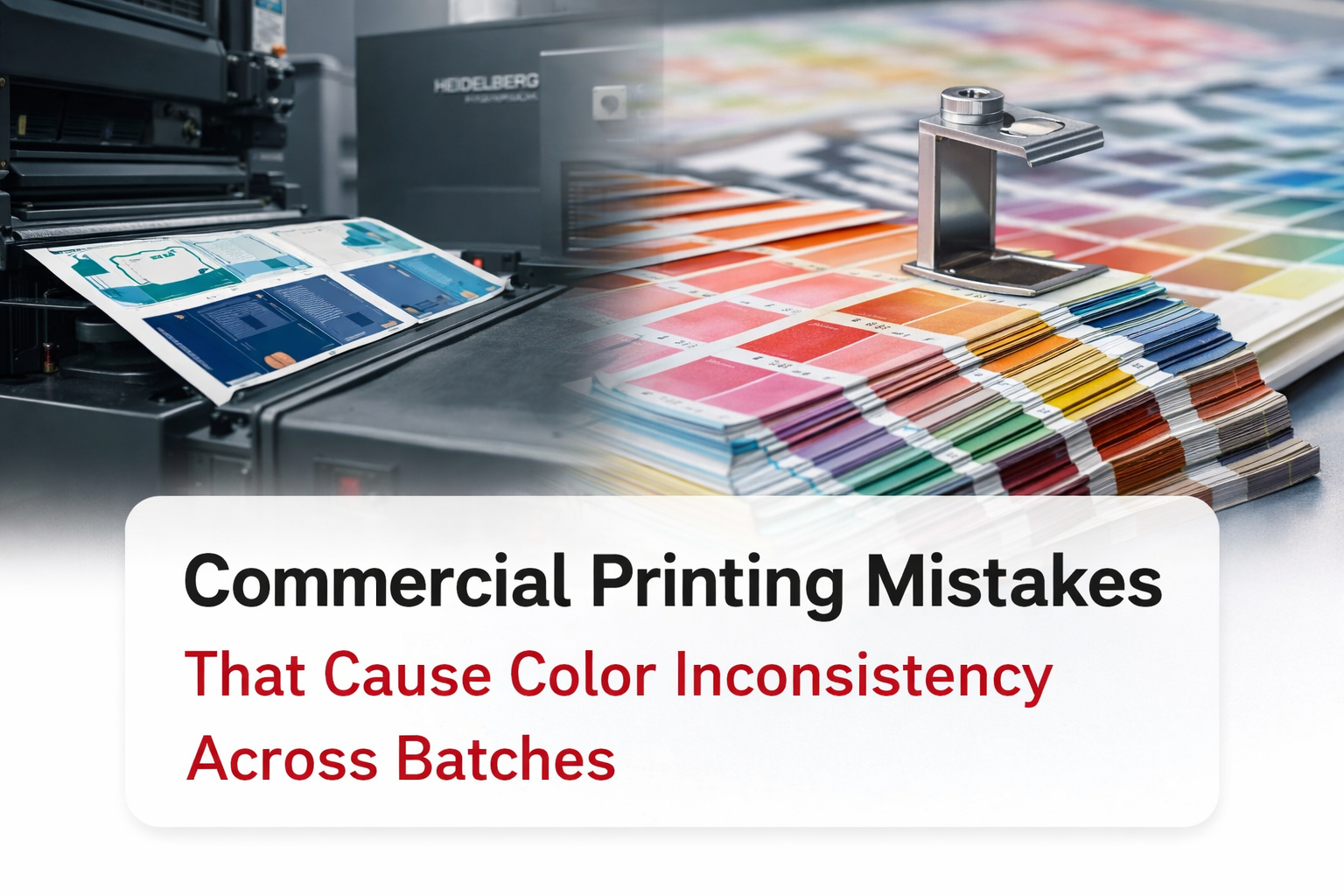
Color consistency is one of the most critical factors in professional Commercial Printing. For brands operating in cosmetics, food, pharmaceutical, and private label sectors, even a slight variation in shade can impact brand perception, regulatory compliance, and consumer trust.
Despite advances in technology, many brands still experience color inconsistencies across print batches. These inconsistencies often appear when production scales, suppliers change, or printing methods shift. The problem is rarely the ink alone; it is usually a combination of technical and operational oversights.
Understanding the common mistakes in commercial printing helps brands protect their visual identity and maintain consistent branding & packaging across markets.
Yes, inconsistent colors across packaging batches can weaken brand recognition, reduce shelf impact, and create customer distrust.
In packaging-driven industries, color is not decorative; it is strategic. Brands invest heavily in specific Pantone shades, gradient effects, and premium finishes. If the printed result varies between batches, the difference becomes noticeable on retail shelves.
Color inconsistency can:
Strong packaging solutions rely on precise and repeatable commercial printing processes.
One of the most common causes of inconsistency is switching between offset printing services and digital printing solutions without recalibration.
Offset printing and digital printing use different technologies:
When brands begin with digital printing for low MOQ production and later shift to offset for high-volume runs, color shifts can occur if artwork and color profiles are not adjusted properly.
Without proper prepress alignment, the same file may produce different results across print methods.
Commercial printing requires controlled color management systems. Many inconsistencies occur because:
Professional commercial printing services rely on consistent press calibration and Pantone referencing to maintain uniformity.
Ignoring calibration protocols leads to noticeable shade differences between production cycles.
Paperboard, rigid materials, and flexible substrates all absorb ink differently. If material sourcing changes between batches, even slightly, the final color can shift.
For example:
When packaging solutions involve multiple material suppliers, controlling substrate consistency becomes essential.
Ink formulation plays a major role in offset printing. If ink mixing is not standardized or documented, even small variations in pigment ratios can create visible differences.
In high-volume offset printing services, precise ink measurement and controlled mixing processes ensure repeatability. Without these controls, subsequent print runs may not match previous batches.
Finishing processes significantly influence perceived color.
Common finishing processes include:
Gloss lamination may deepen color tones, while matte finishes can mute vibrancy. If finishing specifications change between runs, colors may appear inconsistent even if the base print is identical.
This is especially critical in premium branding & packaging where visual precision matters.
Many color inconsistencies stem from poor proofing procedures.
Without:
Production teams may rely on digital previews, which do not accurately represent the final output.
Professional commercial printing workflows require controlled proofing processes before mass production.
As brands grow, they sometimes shift to new suppliers for cost reasons. However, each printing facility may use:
Even minor process differences can cause color shifts.
To maintain consistency, commercial printing operations must align production standards across facilities.
Preventing color inconsistency requires a structured approach:
Maintain documented Pantone references and approved print samples.
Plan whether production will use offset or digital long term.
Use consistent material specifications across batches.
Keep lamination and coating consistent for repeat runs.
Conduct press checks during production, not only after completion.
For high-volume packaging production, color consistency becomes even more critical. Offset printing is often preferred for large-scale runs because it offers stable long-term repeatability.
However, digital printing solutions remain valuable for short runs and rapid product launches. The key is not choosing one blindly but aligning the method with volume and brand requirements.
Integrated packaging solutions ensure printing decisions match long-term growth plans.
Color precision is essential for luxury appeal. Slight shade variations can impact shelf perception.
Clarity and consistency are required for compliance and brand reliability.
Durable ink performance and consistent labeling are critical for distribution.
In each case, commercial printing must support stable and predictable results.
Color inconsistency in Commercial Printing is rarely caused by a single factor. It is typically the result of process gaps, poor calibration, inconsistent materials, or unplanned transitions between print methods.
Brands that prioritize structured printing workflows, standardized color management, and aligned production strategies reduce the risk of reprints, delays, and brand damage.
Consistent printing protects more than appearance; it protects credibility. Contact Us for more information.
Because of changes in print method, material, ink mixing, or finishing processes.
Offset printing services often provide better repeatability for high-volume runs.
Yes, especially when transitioning from digital to offset without recalibration.
Yes, gloss or matte finishes can change how colors appear visually.
By standardizing color profiles, approving physical proofs, and maintaining consistent material and finishing specifications.