
24/02/2026




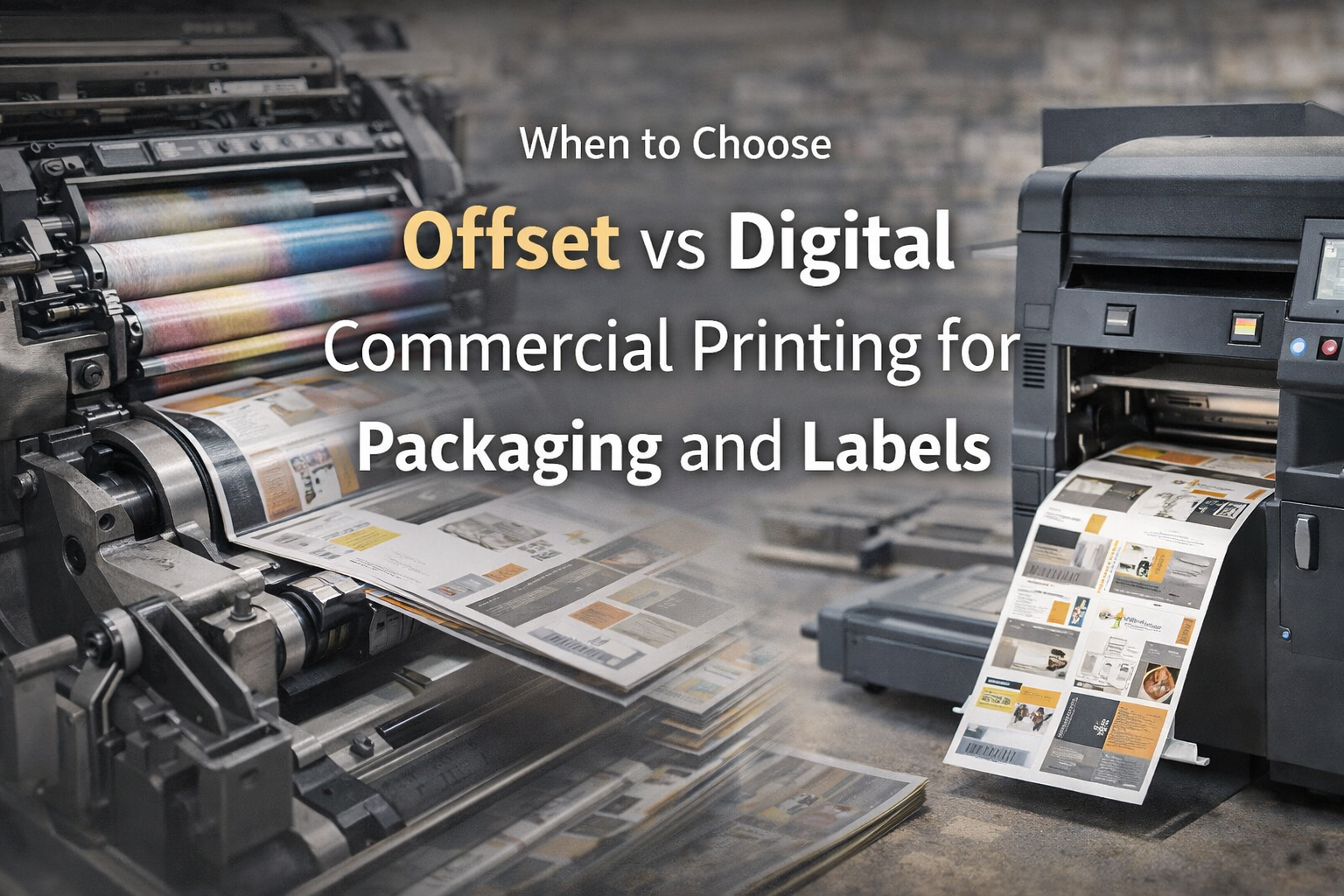
Choosing the right print method is one of the most important decisions in Commercial Printing for packaging and labels. The wrong choice can increase costs, delay production, reduce color consistency, and affect brand perception. The right choice improves efficiency, scalability, and visual quality.
Many brands struggle to decide between offset and digital printing because both have clear advantages. The confusion often comes from focusing only on price per unit instead of considering volume, finish requirements, brand consistency, and long-term scalability.
Understanding when to choose offset versus digital commercial printing helps brands make informed decisions that align with operational and branding goals.
No, the right choice depends on production volume, design complexity, timeline, and long-term scalability.
Commercial printing for packaging is not just about transferring artwork onto material. It directly affects:
Whether producing cartons, inserts, or labels & stickers, the selected printing method influences every stage of packaging performance.
Offset printing uses metal plates and rubber blankets to transfer ink onto the substrate. It is widely used for high-volume production because of its efficiency and color accuracy.
Offset printing is often preferred for cosmetic cartons, pharmaceutical packaging, and food boxes where brand consistency is critical.
Digital printing transfers artwork directly onto the material without the need for printing plates. It is ideal for short runs and variable data printing.
Many startups and private label brands rely on digital printing during early product launches.
If packaging volumes are large, offset printing typically reduces per-unit cost. Although setup costs are higher due to plate creation, those costs spread efficiently across large runs.
For example, a cosmetics brand producing 200,000 cartons benefits significantly from offset’s efficiency.
Brands with strong visual identity require accurate Pantone reproduction. Offset printing delivers superior color stability across batches, which is essential in branding & packaging consistency.
This is particularly important for:
Offset printing integrates well with advanced finishes such as:
When packaging involves premium finishes, offset often supports better results.
For products with stable, predictable demand, offset printing provides better long-term margins.
Digital printing is ideal when brands need flexibility. If production volumes are small or uncertain, digital avoids plate costs and reduces financial risk.
This is common in:
Digital printing supports rapid artwork modifications. Brands launching seasonal packaging or promotional SKUs benefit from digital flexibility.
Because digital printing does not require plate setup, it reduces initial production time. For urgent orders, this can be a major advantage.
Digital allows unique elements such as:
This is useful in certain regulated sectors and marketing campaigns.
One of the most common mistakes in Commercial Printing is evaluating only upfront cost.
Brands must evaluate projected growth. A method suitable today may become inefficient within months if demand increases.
For labels & stickers, the decision depends on:
High-volume label production often benefits from offset for consistency. However, limited-edition labels may work better with digital printing solutions.
Label durability and barcode clarity must also be considered, especially for pharmaceutical and food products.
Cosmetics brands prioritize color accuracy and premium finishes. Offset printing typically supports this need at scale, while digital is suitable for limited product drops.
Food packaging must maintain readability and compliance. Both offset and digital can work, but volume and regulatory labeling requirements guide the choice.
Consistency, clarity, and compliance are critical. Offset printing often provides better long-term stability for high-volume pharmaceutical cartons.
Printing decisions should align with overall branding & packaging strategy. If a brand plans rapid expansion, selecting a scalable method early prevents costly transitions.
A structured packaging roadmap should answer:
This approach ensures printing supports business growth.
Brands frequently encounter issues when:
Proper planning reduces rework, cost overruns, and timeline delays.
In many cases, the solution is not choosing one exclusively. Some brands use:
This phased strategy allows cost efficiency without sacrificing flexibility.
There is no universal answer to offset versus digital in Commercial Printing. The correct choice depends on volume, growth plans, brand requirements, and finishing complexity.
Offset printing delivers consistency and cost efficiency at scale. Digital printing offers flexibility and speed for smaller runs. Brands that evaluate both short-term needs and long-term scalability make more informed decisions.
By aligning printing methods with packaging structure, volume forecasts, and brand identity, companies can optimize both cost and quality across their packaging lifecycle. For more Information Contact Us.
No, it is better for high-volume production but not ideal for small runs.
It is cheaper for small quantities but can become expensive at higher volumes.
Offset printing typically provides more stable color reproduction.
Yes, especially for low MOQ or variable data labels.
By evaluating production volume, growth plans, finishing needs, and cost structure.