
03/02/2026




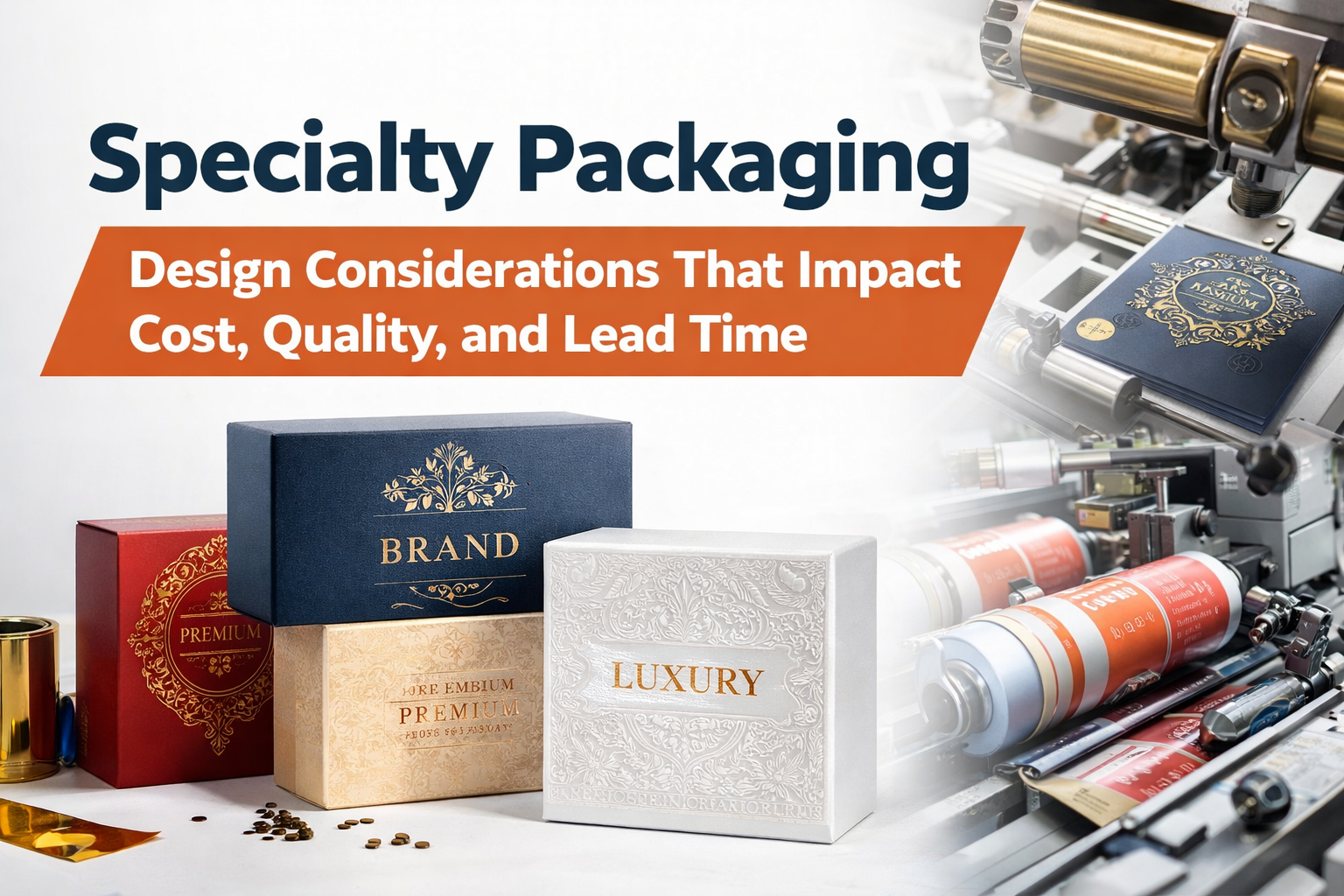
Specialty packaging is often used to elevate brand perception, differentiate products on the shelf, and create a premium customer experience. When executed well, it adds tangible value. When planned poorly, it increases cost, extends lead times, and introduces quality risks that surface too late in production.
Many brands approach specialty packaging primarily from a creative perspective. Visual appeal becomes the priority, while production realities are addressed later. This disconnect is the root cause of most cost overruns, delays, and inconsistencies associated with specialty packaging projects.
Understanding the design considerations that influence cost, quality, and lead time is essential for brands that want premium packaging without operational setbacks.
Q.1 Does specialty packaging require more planning than standard packaging?
Yes, specialty packaging involves complex materials and finishes that must be aligned with production capabilities early to control cost, quality, and timelines.
Specialty packaging typically includes enhanced materials, advanced printing techniques, and decorative finishes designed to create a premium look and feel. These elements increase visual impact, but they also introduce more variables into the production process.
Unlike standard packaging, specialty packaging requires tighter coordination between design, printing, finishing, and assembly to achieve consistent results at scale.
One of the most common cost drivers in specialty packaging is unnecessary complexity. Designs may include multiple finishes or layered effects that look impressive in concept but offer limited functional or brand value.
Each additional process increases:
Designs that balance visual impact with production efficiency tend to deliver better long-term value.
Printing choice plays a major role in specialty packaging cost. High-quality finishes often require offset printing services, especially when consistency and color accuracy are critical.
Offset printing provides:
However, offset printing requires longer setup times and higher upfront costs, making early planning essential to avoid delays.
Micro embossing is used to add subtle texture and depth, enhancing tactile appeal. However, embossing depth, board thickness, and material quality must be aligned carefully.
Poor planning can lead to:
Embossing should be designed with material behavior and production pressure limits in mind.
Foil stamping is commonly used to create a premium appearance, but it introduces quality challenges when not planned properly.
Cold foil stamping is suitable for high-speed production and inline application. It works best for flat surfaces and lighter foil coverage. Poor compatibility between foil, adhesive, and substrate can result in dull finishes or incomplete transfer.
Hot foil stamping delivers sharper definition and stronger visual contrast, but it requires additional setup and longer processing time. Misalignment between foil tooling and material selection can lead to uneven results or surface damage.
Choosing between cold foil stamping and hot foil stamping should be based on production volume, substrate type, and desired finish durability.
Each specialty element added to packaging extends the production timeline. Embossing, foil stamping, and specialty coatings all require:
Without early coordination, these processes stack up and create bottlenecks that delay delivery.
Specialty packaging often involves custom dies, plates, or embossing tools. These components require:
Delays at any stage can push timelines significantly. Early alignment between design and production helps streamline approvals and reduce revisions.
Material choice directly affects how specialty finishes perform. Certain boards and coatings respond better to embossing and foiling, while others may crack, warp, or lose definition.
Material selection should consider:
Selecting materials purely for appearance often leads to performance issues later.
Specialty packaging that looks excellent in small batches may struggle during scale-up. Increased production speed and volume amplify minor inconsistencies.
Scalable specialty packaging design focuses on:
This ensures quality remains consistent across larger runs without excessive rework.
Early technical planning allows brands to:
This approach keeps specialty packaging aligned with both brand goals and operational efficiency.
Treating specialty packaging as a standalone decorative layer often leads to issues. Instead, it should be viewed as a system where design, printing, finishing, and logistics are interconnected.
When these elements are planned together, brands gain:
This system-based approach is essential for long-term success.
Late packaging delivery can delay product launches, disrupt distribution schedules, and strain retail relationships. Specialty packaging projects are especially sensitive to delays due to their complexity.
Clear timelines, early testing, and realistic production planning help prevent last-minute surprises.
Specialty packaging can elevate brand perception when designed with both creativity and technical discipline. Cost, quality, and lead time are directly influenced by early decisions around printing methods, materials, and finishing techniques.
By aligning design intent with production realities, especially when using advanced processes like micro embossing, cold foil stamping, hot foil stamping, and offset printing services, brands can achieve premium packaging without unnecessary risk.
Successful specialty packaging is not about adding more elements, but about making informed choices that balance visual impact with operational reliability. Contact Us for more information.
Because it involves additional materials, tooling, and finishing processes.
Yes, offset printing provides better control and consistency for premium finishes.
Cold foil is faster and inline, while hot foil offers sharper definition but requires more setup.
Yes, with proper material selection and early production planning.
By aligning design, tooling, and production processes early in the project lifecycle.