
27/04/2026




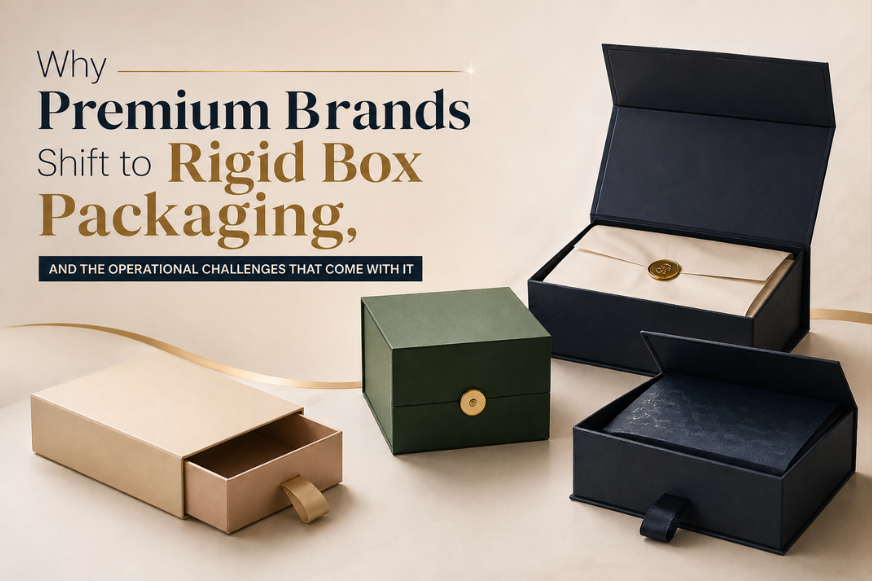
Walk into any high-end retail store and the packaging communicates quality before the product does. The weight of the box, the resistance when you lift the lid, the precision of the corners — these details build the first impression. This is why premium brands across beauty, electronics, fashion, and gifting are shifting to rigid box packaging.
But the decision is not purely aesthetic. Rigid box packaging changes how a brand operates — from supplier relationships and storage to production timelines and unit costs. For brand managers evaluating this shift, understanding both sides clearly is essential before committing.
This article breaks down why premium brands make this move, what they gain from it, and the real operational challenges that follow. If your brand is considering rigid packaging, here is the full picture before you commit.
Q. Is rigid box packaging worth the higher cost for growing premium brands?
Yes — but only when packaging aligns with your product's price point and target customer. Ipsos research shows 72% of consumers say packaging design influences their purchase decision. For premium brands, rigid packaging supports the perceived value that justifies higher price points. The cost is a brand investment, not overhead.
The shift to rigid packaging is a calculated brand positioning decision — driven by consumer psychology, retail performance, and product protection needs.
Folding carton packaging serves functional purposes well. But it compresses and creases over time. Rigid boxes hold their form from production through the customer's hands — and often well beyond. Many customers keep luxury rigid boxes long after the product is gone, extending brand visibility past the point of purchase.
A 2022 Dotcom Distribution study found 40% of consumers are more likely to repurchase when orders arrive in premium packaging. At a higher price point, that repeat rate makes the packaging investment justify itself.
Rigid packaging uses thick greyboard — typically 1,500 to 3,000 microns — wrapped in specialty paper or custom-printed material. This construction does not flex under pressure. For fragile products like glass, electronics, or jewellery, it provides structural protection that folding cartons cannot match at equivalent weight.
The unboxing experience is now a measurable marketing metric. Brands that design deliberate opening sequences — magnetic closures, ribbon pulls, layered tissue — generate organic video content from customers. Rigid boxes are the only format that delivers this level of opening theatre consistently.
Luxury rigid boxes signal quality before the product is seen. Surface treatments — soft-touch lamination, foil stamping, embossing, spot UV — reinforce premium positioning at every touchpoint. For gift box packaging, the box is part of the gift. Customers evaluate it as such, and it directly influences purchase decisions at retail.
The benefits of rigid box packaging are well documented. The operational challenges are less discussed — but they require planning before you commit to the format.
Rigid boxes cost more per unit than folding cartons. Material cost is higher, production is more labour-intensive, and setup costs spread across larger MOQs. For growing brands with multiple SKUs, these commitments tie up working capital and increase inventory risk.
Unlike folding cartons, rigid boxes cannot be shipped flat. They are produced and stored in finished form — requiring substantially more warehouse space. For brands with limited storage, this creates a real logistical constraint during peak production seasons.
Rigid packaging requires longer production timelines than standard cardboard box formats. The construction process involves more steps and more curing time. Brands accustomed to folding carton turnarounds often underestimate rigid box lead times, creating supply gaps during launches or seasonal pushes.
Rigid box construction is less forgiving of design errors. A misaligned wrap or colour that reads differently on wrap material can only be caught through a physical sample. A precise cardboard box mockup at the design approval stage prevents full-run correction costs.
Producing luxury packaging boxes at consistent quality across batches is technically demanding. Small material lot variations create visible colour differences — a serious problem for premium brands where visual consistency is non-negotiable.
Managing rigid packaging operationally requires more structure than folding carton programs. Brands that handle this well build the following systems:
• Centralised design templates that lock wrap alignment, colour specifications, and closure position before any production run begins
• Physical sample approval for every new SKU and every new batch — not just new designs
• Cardboard box mockup review at design stage to catch structural and visual errors before tooling costs apply
Brands that skip these systems encounter expensive corrections at scale — reruns, batch rejections, and compliance failures that structured pre-production prevents.
The operational challenges of rigid packaging — MOQ management, colour consistency, mockup validation, lead time planning — require a partner with direct rigid production experience, not a general print supplier.
InstaPrintPack works with premium brands managing rigid box packaging across multiple SKUs, providing structured production systems that address the specific challenges discussed in this article:
• Rigid box production using high-grade greyboard with consistent wrap alignment and colour calibration across batches
• Physical and digital cardboard box mockup review before production approval
• Surface finish expertise across foil stamping, soft-touch lamination, embossing, and spot UV for luxury rigid boxes
• Quality control processes that maintain luxury packaging standards across all production runs
Validate Every Design With a Mockup
Never approve rigid packaging production without a physical or accurate digital mockup. Errors caught at mockup stage cost a fraction of a full-run correction.
Plan MOQ Commitments Carefully
Rigid box MOQs are higher than folding carton alternatives. Commit to quantities your sales forecast supports — not quantities that minimise unit cost at the expense of cash flow.
Build Lead Time Into Your Launch Calendar
Rigid packaging lead times are longer than standard alternatives. Build this into launch planning from the start — not as an afterthought when a deadline is already at risk.
The shift to rigid box packaging is one of the most impactful decisions a premium product brand can make. Structural protection, a deliberate unboxing experience, elevated perceived value, and stronger customer retention are all outcomes supported by consumer research and retail performance data.
The operational challenges — higher unit costs, storage requirements, longer lead times, and quality control demands — are equally real and require deliberate planning. Brands that invest in the right production systems and pre-production validation manage rigid packaging effectively at scale. Rigid packaging rewards preparation. For more information, Contact Us.
What makes rigid box packaging different from regular folding cartons?
Rigid boxes use thick greyboard construction that holds shape permanently, unlike folding cartons that flex and compress under pressure.
Why do luxury brands prefer rigid boxes for their products?
Rigid boxes signal quality through weight, structure, and premium surface finishes — reinforcing brand value before the product is opened.
What are the main operational challenges of switching to rigid box packaging?
Higher unit costs, larger MOQ requirements, longer lead times, and significantly more warehouse space per unit than flat-pack alternatives.
How important is a cardboard box mockup before committing to production?
Essential. Mockup review catches wrap alignment, colour, and structural errors before full production costs and tooling are committed.
Can growing brands access luxury rigid boxes without very large order volumes?
Yes, with a packaging partner offering flexible MOQ structures suited to multi-SKU premium brand production programs.