
12/06/2026




A growing brand rarely relies on just one type of packaging.
A single product may use a bottle label, folding carton, flexible pouch, promotional insert, and shipping packaging, all carrying the same logo, colors, and brand identity.
Everything may look perfect during the design stage.
However, once production begins, many brands notice something unexpected.
The brand color on the label appears slightly different from the carton. The pouch looks brighter than the box. The same logo doesn't look identical across every packaging component.
Naturally, this raises questions.
If the same artwork file is being used, why do the colors look different?
This is one of the most common yet overlooked challenges in modern branding & packaging. As brands expand across multiple products, packaging formats, and distribution channels, maintaining consistent brand colors becomes increasingly difficult.
For businesses investing heavily in brand identity, even small color variations can impact product presentation, shelf appeal, and customer perception.
Understanding why this happens is the first step toward building a more consistent packaging experience.
Because different packaging materials, printing processes, and surface finishes affect how colors appear on the final product. Even when the artwork remains unchanged, the packaging format itself can influence the visual result.
Many brands assume that once brand colors are approved, they will automatically appear the same across every packaging component.
In reality, packaging production is more complex.
A brand may use:
Each format behaves differently during printing and production.
As a result, the same color may not appear identical across every application.
One of the biggest factors affecting color consistency is the material itself.
For example:
Paper absorbs ink differently than other packaging materials.
This can slightly alter color intensity and appearance.
Cartons often use coated board materials that reflect light differently, influencing how colors are perceived.
Pouches and flexible materials can create unique color characteristics due to their surface composition and printing methods.
Matte, gloss, soft-touch, and laminated finishes can further change how colors appear under different lighting conditions.
For many brands, color variation is not simply a printing issue.
It becomes a branding issue.
Consumers rarely understand printing processes.
They only notice the final product.
Imagine a customer comparing:
If the same brand color appears noticeably different across each component, the overall brand experience becomes less cohesive.
This can affect:
Consistent colors help consumers instantly identify a brand.
Products look stronger when packaging elements work together visually.
Consistency often reinforces quality and professionalism.
Uniform packaging helps build confidence in the product and brand.
For small businesses with limited product lines, minor color variations may go unnoticed.
However, as brands grow, the challenge becomes more significant.
Growing companies often introduce:
The more packaging components involved, the harder it becomes to maintain consistency.
This is particularly common in:
As packaging ecosystems expand, consistency requires a more structured approach.
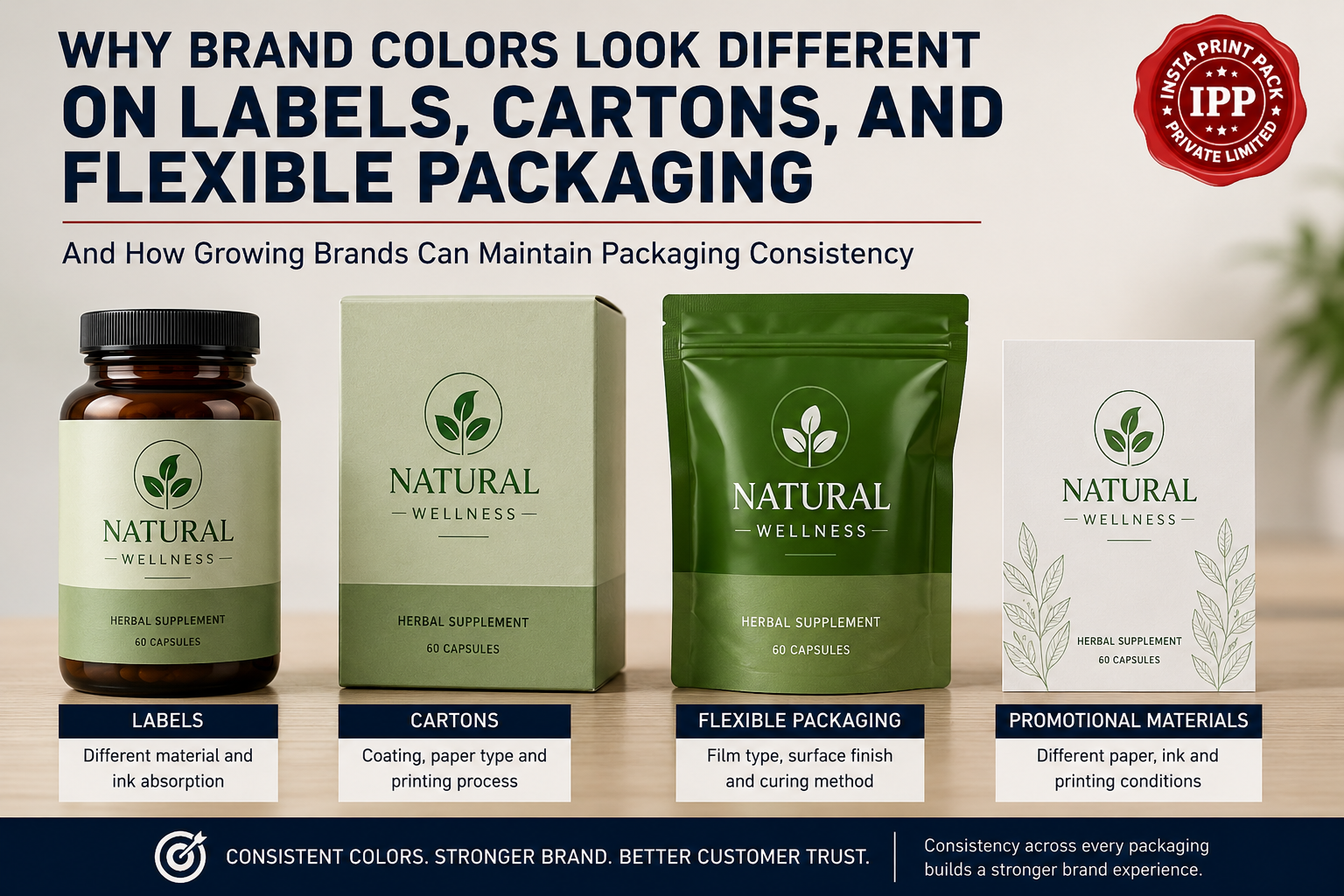
Consider a supplement company launching a new product line.
The brand may use:
All four packaging components contain the same logo and brand colors.
Yet after production, the colors may appear slightly different across each format.
The design team approved one brand identity, but the customer sees multiple versions of the same color.
This is a common challenge many growing brands encounter.
Strong branding & packaging is about creating a unified experience.
Whether customers encounter a product online, on a retail shelf, or through a subscription order, packaging should feel consistent.
Consistency helps brands:
When packaging elements look disconnected, the brand itself can feel less established.
Maintaining color consistency across packaging formats requires more than simply using the same design file.
Effective packaging management often includes:
Defining approved color references for packaging production.
Selecting packaging materials that support color consistency.
Reviewing proofs across different packaging formats before production.
Managing labels, cartons, and flexible packaging as part of a unified packaging strategy.
As packaging programs become more complex, maintaining consistency requires expertise across multiple packaging formats.
Insta Print Pack supports growing brands through integrated custom packaging solutions designed to maintain visual consistency throughout the packaging ecosystem.
High-quality custom label printing helps ensure brand colors remain consistent across product labels and packaging applications.
Professional production of labels & stickers designed to support brand consistency and product presentation.
Consistent product packaging solutions that help brands maintain a unified visual identity across cartons and retail packaging.
Flexible custom packaging solutions that support growing product portfolios while maintaining packaging standards.
Integrated commercial printing processes help improve color accuracy and consistency across packaging formats.
Today's brands operate across more channels, products, and packaging formats than ever before.
Customers expect a seamless brand experience regardless of where or how they encounter a product.
As packaging programs become more sophisticated, maintaining consistency across labels, cartons, and flexible packaging is becoming a competitive advantage.
Brands that invest in packaging consistency often create stronger recognition, stronger trust, and stronger long-term customer relationships.
Maintaining consistent brand colors across packaging formats is one of the most overlooked challenges in the packaging industry.
While the same design may be used across labels, cartons, and flexible packaging, differences in materials, printing processes, and finishes can create noticeable variations.
For growing businesses, these variations can impact branding & packaging, customer perception, and overall brand strength.
The good news is that with the right packaging strategy, production controls, and packaging partner, brands can create a more consistent and professional experience across every packaging format.
Because successful packaging is not just about looking good individually, it is about looking consistent everywhere. For more information, Contact Us.
Different packaging materials absorb and reflect ink differently, which can change how colors appear.
Yes. Labels, cartons, and flexible packaging often use different materials and production methods that affect color appearance.
Consistent packaging improves brand recognition, customer trust, and product presentation.
Supplement, food, cosmetic, wellness, and consumer packaged goods brands frequently encounter packaging consistency challenges.
Through custom label printing, product packaging expertise, commercial printing capabilities, and custom packaging solutions designed to support consistent branding across multiple packaging formats.