
21/05/2026




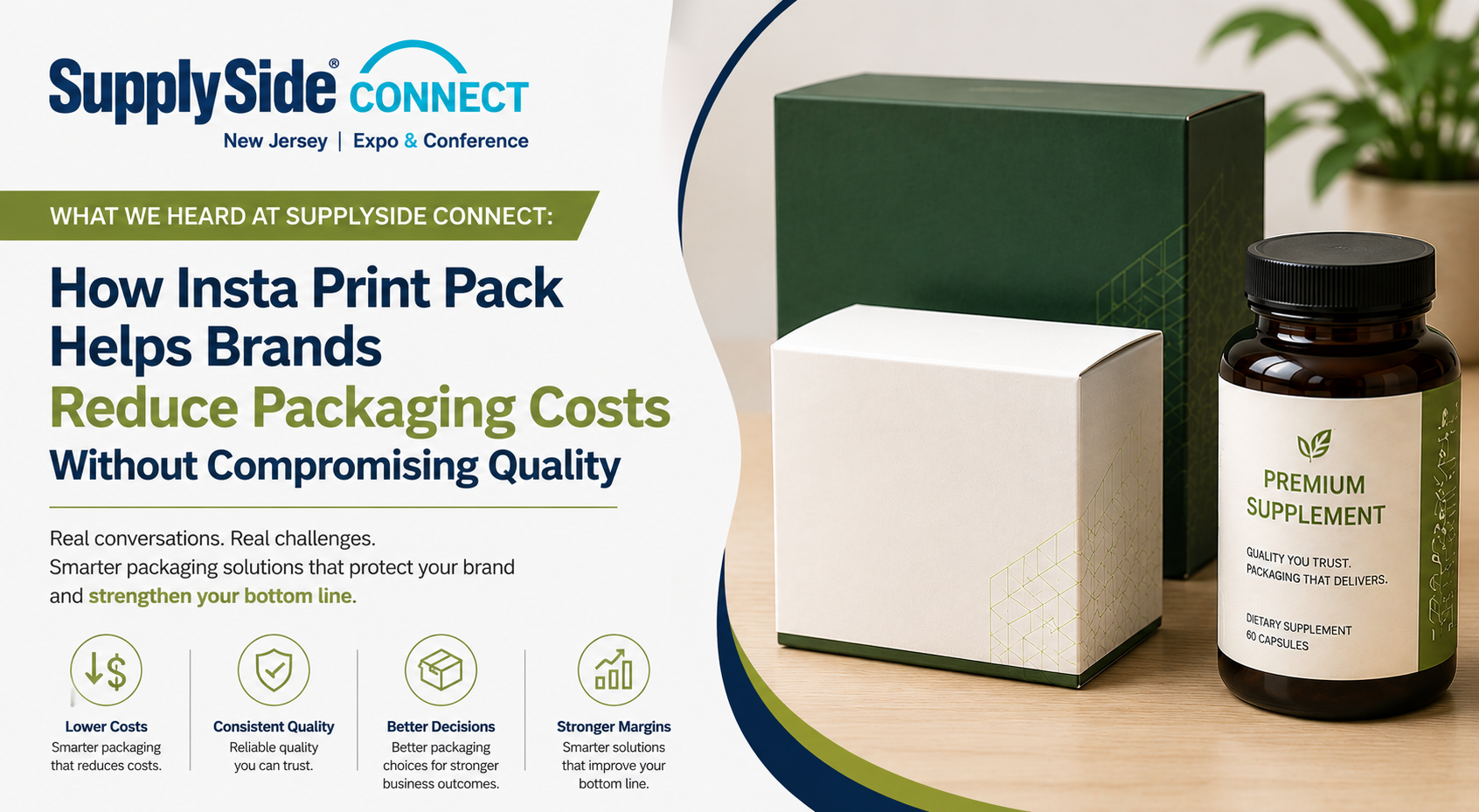
In today’s competitive consumer product market, cost pressure is affecting nearly every operational decision, and packaging is no exception.
For supplement brands, wellness companies, food businesses, and health-focused product manufacturers, maintaining strong margins while protecting product quality has become increasingly challenging. Rising material costs, supply chain unpredictability, and evolving sourcing expectations are forcing brands to take a closer look at packaging spend.
But the real question many businesses are asking is not:
"How do we get cheaper packaging?"
It’s:
"How do we make smarter packaging decisions without hurting our brand?"
At SupplySide Connect New Jersey, this conversation came up repeatedly.
Founders, procurement teams, and product decision-makers were not looking for low-cost shortcuts. They were looking for smarter packaging solutions that improve cost efficiency while maintaining quality and customer perception.
One conversation that stood out was with Purity Products, a well-established wellness brand, whose packaging sourcing challenge reflects a broader market reality many brands are now facing.
Q.1 Can brands reduce packaging costs without lowering packaging quality or weakening brand perception?
Yes.With the right sourcing strategy, structural optimization, and supplier partnership, brands can significantly improve packaging cost efficiency while maintaining quality standards.
One of the strongest themes at SupplySide Connect was cost pressure.
But importantly, the conversation was not about cutting corners.
Brands were discussing:
This reflects a larger shift happening across health, supplement, and consumer packaged goods markets.
As competition increases and operating costs rise, brands are becoming more disciplined about packaging investment.
The mindset is changing from:
"Premium packaging equals better packaging."
to:
"Does this packaging investment actually make strategic sense?"
That shift is driving more businesses to re-evaluate legacy sourcing decisions.
Many brands inherit packaging decisions rather than actively optimize them.
Over time, businesses continue using:
Not because those decisions are still ideal, but because they were never re-evaluated.
This creates hidden cost inefficiencies.
Common examples include:
In many cases, brands are paying significantly more than necessary without improving customer experience.
This is a very real issue in product packaging.
At SupplySide Connect New Jersey, one particularly relevant conversation was with Purity Products, a recognized wellness and health products brand.
Their challenge was familiar to many growing brands.
Their products were being packaged in premium box formats that carried higher packaging costs.
The packaging itself was high-quality, but the sourcing structure was no longer cost-efficient.
The challenge was not to downgrade packaging.
It was to optimize cost while protecting brand standards.
That distinction matters.
The objective was:
By re-evaluating the packaging sourcing strategy and aligning production more efficiently, Insta Print Pack helped reduce packaging costs by nearly 30% without compromising product presentation.
This is exactly the type of optimization many brands now need.
Premium packaging absolutely has value.
Strong branding & packaging can improve:
But premium does not always mean efficient.
In 2026, brands are asking smarter questions:
This is especially relevant in:
The market is shifting from automatic premium spend toward strategic packaging decision-making.
A common misconception is that reducing packaging costs means sacrificing quality.
That is not necessarily true.
Smart packaging optimization can involve:
The right packaging manufacturer can produce equivalent quality more efficiently.
Packaging structures can often be optimized without changing customer-facing presentation.
Using efficient commercial printing or optimized offset printing services can reduce cost waste.
Premium presentation does not always require the most expensive substrate.
Consolidating sourcing reduces complexity and hidden costs.
The goal is not cheaper packaging.
The goal is smarter custom packaging solutions.
The Purity Products conversation reflects a broader trend.
Many brands are now actively reviewing packaging procurement because of:
Packaging is no longer just a design decision.
It is a financial decision.
Smart procurement teams increasingly view packaging through both branding and operational lenses.
In today’s market, brands need suppliers who understand both packaging execution and business realities.
Insta Print Pack supports this through strategic packaging solutions designed around efficiency and performance.
Capabilities include:
Reviewing packaging structures and sourcing opportunities for smarter cost efficiency.
Integrated commercial printing workflows that support production efficiency.
Including custom folding cartons and optimized packaging formats.
Packaging aligned with operational, branding, and cost objectives.
Helping brands improve sourcing efficiency while maintaining quality consistency.
SupplySide Connect reinforced an important reality.
Brands are not simply looking for lower packaging prices.
They are looking for smarter packaging economics.
The conversation with Purity Products reflected a challenge many businesses face: packaging decisions made years ago may no longer align with today’s market conditions.
The brands that remain competitive will be those willing to re-evaluate sourcing, optimize intelligently, and partner with suppliers who understand both brand standards and cost realities.
Because reducing packaging costs should never mean reducing brand quality.
It should mean making better packaging decisions. For more information, Contact Us.
Yes. Strategic sourcing, packaging optimization, and efficient supplier partnerships can reduce costs while maintaining quality.
Because rising operational expenses, margin pressure, and supply chain challenges are forcing more disciplined packaging decisions.
Not always. Premium packaging should align with business goals, customer expectations, and operational efficiency.
Supplement, nutraceutical, food, wellness, consumer packaged goods, and DTC brands.
Through smarter packaging solutions, sourcing optimization, structural packaging expertise, and efficient production support.