
07/03/2026




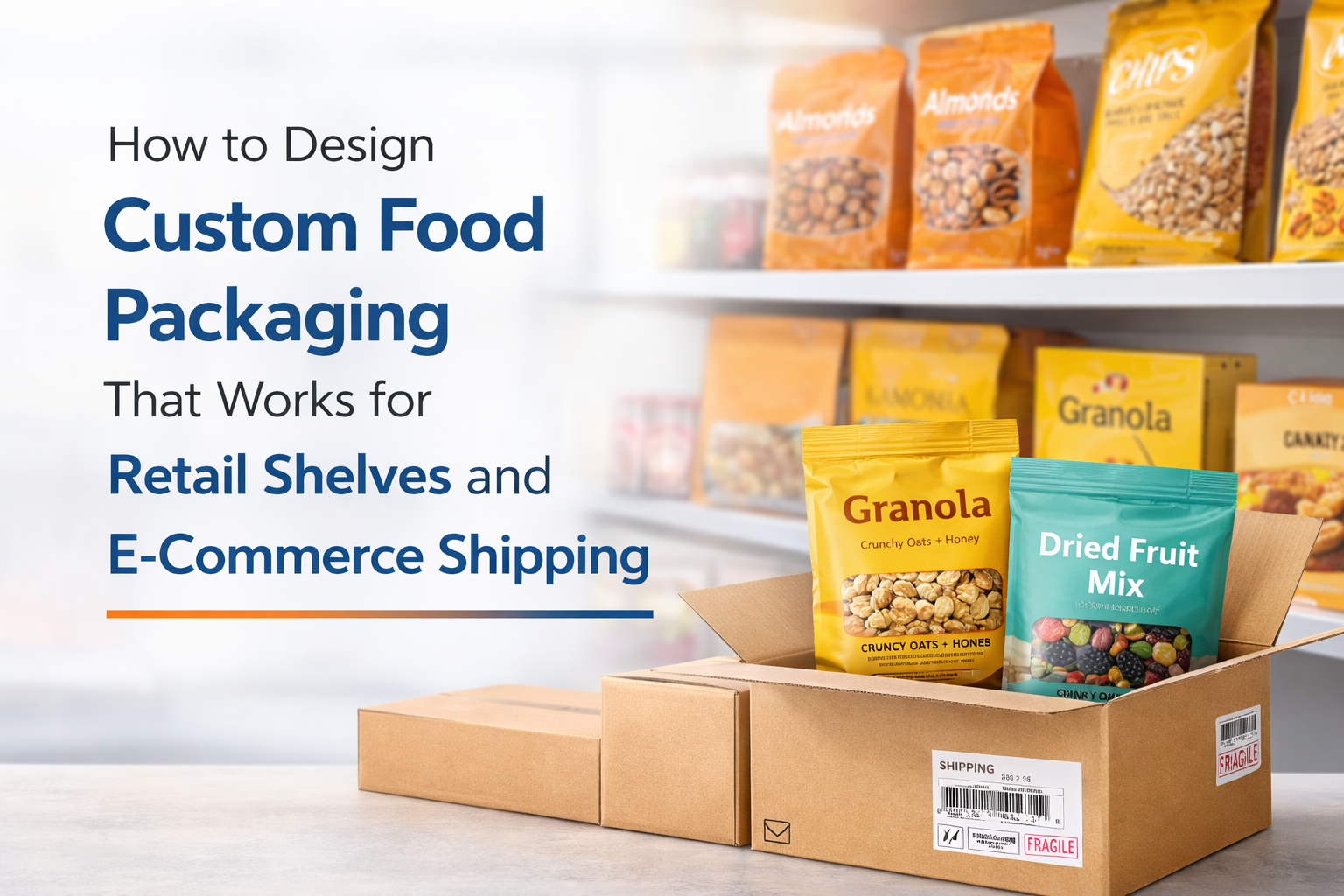
Packaging plays a critical role in how food products are protected, transported, and presented to consumers. For modern food brands, Custom Food Packaging must serve two important functions at the same time: attracting attention on retail shelves and protecting products during e-commerce shipping.
The growth of online grocery platforms and direct-to-consumer food brands has created new packaging challenges. While retail packaging traditionally focused on shelf visibility and branding, e-commerce packaging must also withstand handling, long-distance shipping, and varying environmental conditions.
Designing packaging that performs effectively in both environments requires thoughtful structural planning, appropriate material selection, and high-quality printing processes.
Yes, when packaging structure, material strength, labeling design, and printing quality are planned to support both shelf presentation and shipping protection.
Food brands operate in a competitive marketplace where packaging strongly influences purchase decisions. On retail shelves, packaging must communicate product value within seconds. At the same time, food products sold through online channels require packaging that protects against damage during transportation.
Effective custom food packaging supports several important functions:
When packaging is designed with both retail and shipping environments in mind, brands can maintain product quality while delivering a consistent customer experience.
Retail shelves are crowded with competing products. Packaging must stand out visually while clearly communicating product information.
Consumers often make purchasing decisions within seconds. Packaging design must immediately communicate product category, flavor, quality, and brand identity.
Key elements that enhance shelf visibility include:
Effective food & beverage packaging design helps brands capture consumer attention while building brand recognition.
Retail packaging must maintain its shape and integrity throughout the distribution process. Packaging that bends or collapses on shelves can negatively impact product perception.
Structural design considerations include:
Packaging must remain visually appealing even after handling during stocking and transportation.
E-commerce introduces additional risks for food packaging. Packages may experience vibration, compression, and temperature changes during shipping.
Packaging designed only for retail shelves may not provide adequate protection in these conditions.
During shipping, food packages may be stacked, dropped, or compressed. Strong structural packaging helps prevent product damage.
Design solutions often include:
These elements protect the product while maintaining the visual design of the outer packaging.
Shipping costs are directly influenced by packaging weight and size. Bulky packaging may increase logistics expenses for food brands selling online.
Efficient custom food packaging balances product protection with a lightweight design to reduce shipping costs without compromising durability.
Choosing the right packaging material is essential for maintaining food safety and product quality. Materials must provide both structural protection and compatibility with printing and finishing processes.
Common materials used in food packaging include:
The selected material must comply with food safety regulations while supporting the visual requirements of retail packaging.
Food products must include clear labeling to meet regulatory requirements. Packaging design must allow space for important information, such as:
Well-designed food product label design ensures that all required information is clearly visible without disrupting the visual branding of the package.
Effective labeling also supports consumer trust and product transparency.
High-quality printing is essential for producing packaging that communicates product quality and brand identity. Commercial printing techniques allow brands to achieve consistent color reproduction and clear text across large production volumes.
Printing quality directly affects:
Offset printing is commonly used for large production runs because it provides excellent color consistency and cost efficiency. Digital printing can be useful for shorter runs or product variations.
The choice of printing method should align with production scale and packaging requirements.
Modern food brands often sell products through multiple channels, including supermarkets, specialty stores, and online platforms. Packaging must perform consistently across these environments.
Design strategies that support multi-channel distribution include:
When custom food packaging is designed with flexibility in mind, brands can maintain product quality across different sales channels.
Packaging design must support both marketing and operational goals. While visually attractive packaging is important, production efficiency and cost control must also be considered.
Brands should evaluate:
Balancing these factors ensures that packaging performs effectively without increasing operational complexity.
Designing Custom Food Packaging that works for both retail shelves and e-commerce shipping requires a thoughtful combination of structural design, material selection, and high-quality printing. Packaging must capture consumer attention in retail environments while providing sufficient protection during transportation.
By integrating durable materials, efficient structural design, clear labeling, and professional commercial printing, food brands can develop packaging that supports product safety, brand visibility, and operational efficiency.
Packaging that performs well across both retail and e-commerce environments helps brands maintain product quality and deliver a consistent consumer experience. Contact Us for more information.
Custom food packaging refers to packaging specifically designed for a food product, considering branding, product protection, and regulatory requirements.
Packaging protects the product, communicates brand identity, and provides essential information such as ingredients and expiration dates.
Commercial printing ensures consistent colors, clear graphics, and readable product information across large production runs.
Paperboard cartons, corrugated packaging, and coated materials are commonly used depending on the product type and shipping requirements.
Yes, with proper structural design, durable materials, and efficient labeling, packaging can perform effectively in both environments.