
27/04/2026





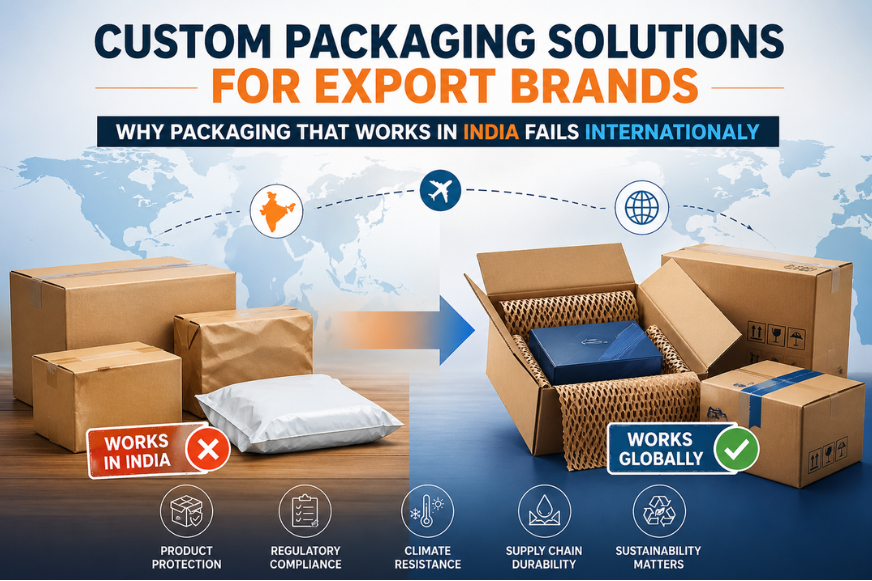
You built a strong product. Your packaging looks sharp in Indian retail stores. Then you ship your first export order — and the problems begin.
The barcode format is incompatible with the destination country's retail system. The label carries no local language text. The carton boxes arrive warped after three weeks in a sea freight container. The overseas retail buyer flags your packaging as non-compliant.
This is the most consistent failure point for Indian SME brands entering export markets. It happens because the custom packaging solutions that work for domestic distribution were never designed with international requirements in mind. This article explains why the gap exists, what it costs, and how Indian brands can build custom packaging solutions that perform across both markets — without running two separate packaging operations.
Q. Can an Indian brand use the same packaging for both domestic and export markets?
Rarely without modification. Export packaging must meet international packaging standards covering labeling regulations, material durability for long shipping cycles, and retail compliance in destination markets. With the right custom packaging solutions built in from the start, packaging can adapt across markets without a full redesign.
According to Dotcom Distribution, 40% of consumers are more likely to repurchase after a premium unboxing experience. In export markets where your brand has no prior recognition, the box carries your entire first impression.
Domestic packaging relies on shortcuts: lower board weight, region-specific label formats, or finishes suited to Indian retail lighting. Export markets expose every shortcut across a longer supply chain — from production through sea freight, customs, warehousing, and retail placement.
The Paper and Packaging Board reports that 72% of consumers say packaging design influences their purchase decision. In export markets, unfamiliar brands face more scrutiny — packaging is the only tool available to build immediate trust.
Creative packaging design for export requires a different brief than domestic work. Color symbolism, typography, and image choices carry cultural meaning that varies by market. A design built for Indian shelves may alienate buyers elsewhere. The unboxing experience is a measurable brand metric — deliberate opening sequences generate organic social sharing that builds awareness in new markets.
The EU requires ingredient declarations in local destination languages. The US FDA mandates specific nutrition label formats. The UAE requires Arabic text on food and personal care products. Non-compliant labels result in customs holds, product recalls, and retailer rejection.
Carton box packaging for domestic road transport uses 200–300gsm board. Export shipments travel by sea freight for three to six weeks in containers with temperature swings and stacking pressure. That board weight may deform before reaching the destination. Print quality consistency also suffers when materials absorb moisture during transit.
India primarily uses EAN-13 barcodes. Many US retailers require UPC-A. A barcode that does not scan in the destination country's point-of-sale system can disqualify your product from an entire retail chain with no explanation.
Export retail environments have different shelf dimensions and compliance checklists. A box designed for Indian retail may not fit a European planogram or carry certifications that overseas buyers require before listing.
The gap between domestic and export packaging is real, specific, and fixable. Indian brands with strong domestic custom packaging solutions need targeted adaptation — not a full rebuild.
Export markets require packaging built for longer supply chains, stricter labeling, and stronger sustainability standards. Understanding international packaging standards and investing in material durability can separate successful export programs from expensive failures.
Why does Indian domestic packaging fail in export markets?
Domestic packaging lacks the label compliance, material durability, and barcode formats required by international retail standards.
What is the most common export packaging compliance failure for Indian brands?
Label non-compliance — missing local language text and incorrect regulatory formats.