
28/02/2026




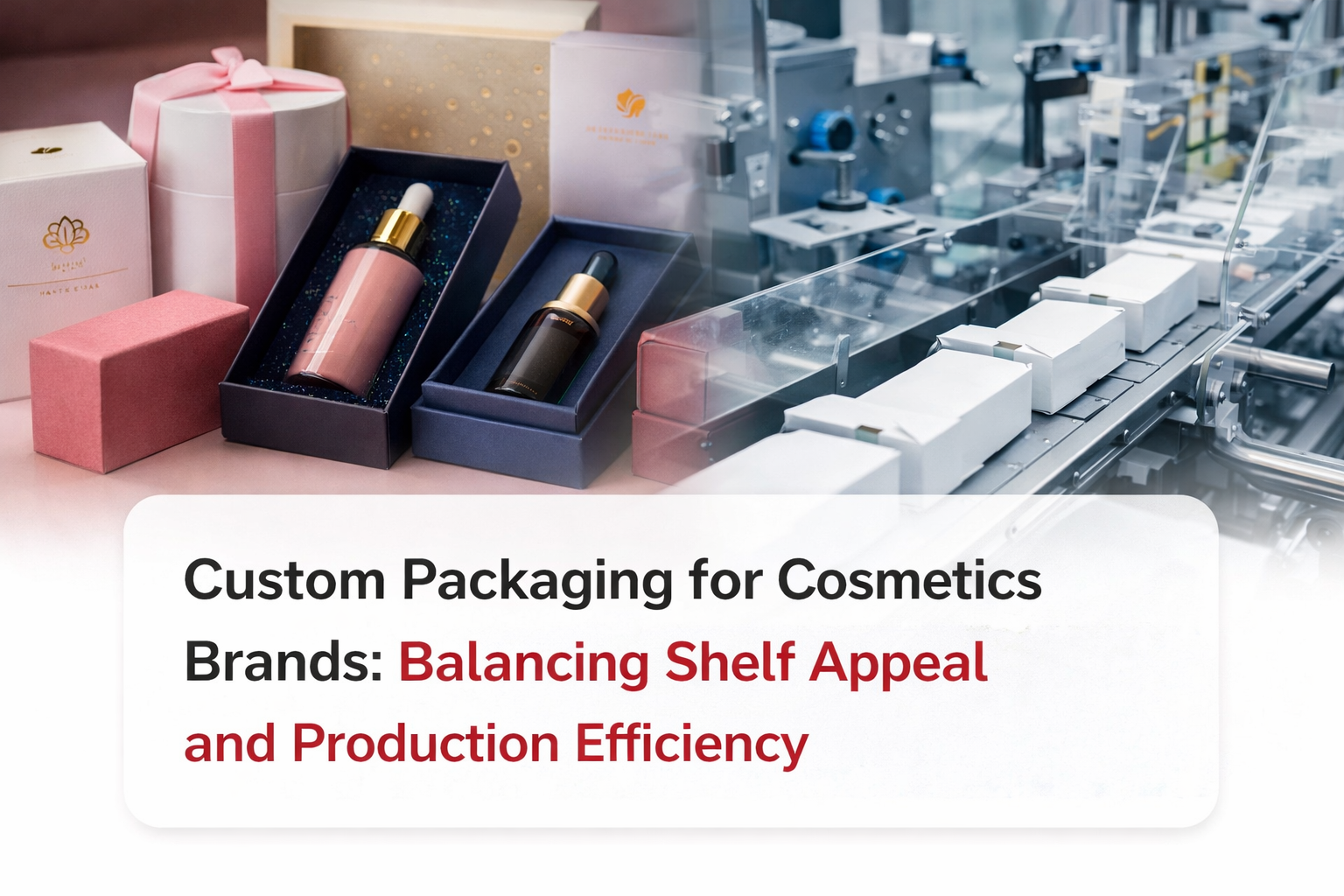
In the cosmetics industry, packaging is often the first interaction a consumer has with a product. Texture, color accuracy, finish quality, and structural integrity all influence purchase decisions. However, while shelf appeal is essential, production efficiency determines long-term profitability.
For cosmetics brands, whether established players or emerging private labels, Custom Packaging must deliver visual impact without creating operational bottlenecks. The challenge lies in balancing premium presentation with scalable manufacturing.
Yes, when custom packaging is designed with scalable materials, compatible finishes, and aligned print methods from the start.
Cosmetics is a visually driven market. Consumers associate premium finishes, embossing, metallic accents, and rigid structures with product quality.
Effective cosmetic packaging supports:
However, the same premium elements that create appeal can also increase production complexity and cost if not planned properly.
Structural formats such as:
Play a major role in brand positioning. High-end skincare and fragrance brands often use luxury cosmetic packaging boxes to create a premium unboxing experience.
However, rigid structures increase material cost and shipping weight. Brands must evaluate whether the structure aligns with both brand image and distribution efficiency.
Cosmetic brands frequently incorporate:
These finishes enhance visual appeal but must be compatible with production speed and large-scale manufacturing.
Overuse of decorative elements can slow production and increase rejection rates.
Brand recognition in cosmetics depends heavily on consistent color reproduction. Slight shifts in shade across batches can impact product identity.
When working with custom cosmetic packaging manufacturers, maintaining color consistency across production volumes is critical for brand stability.
While aesthetics drive design decisions, production efficiency determines margins and scalability.
Key operational considerations include:
Ignoring these factors can result in delays and rising per-unit costs.
Cosmetics brands often start with low MOQ production using digital printing. As demand increases, they transition to offset printing for better cost efficiency at scale.
However, if the artwork is not prepared with scalability in mind, this transition may cause:
Planning custom packaging that supports both digital and offset printing ensures smoother growth.
Material plays a crucial role in both presentation and performance.
Premium board with coated surfaces enhances print vibrancy but must also withstand:
For high-end cosmetic box packaging, material selection should prioritize durability without unnecessary weight or cost.
One of the biggest misconceptions in the cosmetics industry is that luxury packaging always requires maximum embellishment.
In reality, selective finishing often delivers stronger results than over-layered design.
For example:
These techniques support premium perception while maintaining production efficiency.
Emerging beauty brands face a unique challenge. They require:
Working with experienced custom cosmetic packaging manufacturers helps brands design packaging that transitions smoothly from short-run launches to large-scale production.
Scalable packaging planning prevents costly redesign during growth phases.
Cosmetics packaging must also include:
Integrating labeling requirements into the packaging structure early prevents layout adjustments later.
In many cases, custom packaging integrates both printed cartons and label elements to maintain flexibility across SKUs.
Cosmetic packaging must withstand shipping and storage conditions, especially in e-commerce-driven markets.
Rigid packaging may enhance shelf presence but increase shipping costs. Folding cartons reduce weight but require structural reinforcement.
Balancing structure with logistics efficiency ensures long-term profitability.
Current trends influencing cosmatic packaging and cosmetic packaging include:
Brands are increasingly focusing on efficiency without sacrificing aesthetic value.
Effective Custom Packaging for cosmetics is not just about initial design—it is about long-term performance.
When packaging is designed with:
Brands avoid production bottlenecks and maintain consistent shelf appeal.
This approach aligns both creative and operational priorities.
In the cosmetics industry, packaging defines perception. However, perception must be supported by production discipline. Premium finishes, structural innovation, and luxury presentation are valuable, but only when aligned with scalable manufacturing processes.
By designing Custom Packaging that balances shelf appeal with operational efficiency, cosmetics brands can protect margins, maintain consistency, and support sustainable growth across markets.
Packaging should not just look premium; it should perform reliably throughout production. Contact Us for more information.
Because packaging directly influences shelf appeal, brand recognition, and consumer perception.
Yes, when materials and finishes are planned for high-volume compatibility.
By aligning print methods, materials, and finishing techniques with long-term production goals.
Not necessarily. Strategic use of finishes can deliver luxury appeal without excessive expense.
Over-engineering packaging without considering production scalability and logistics.