
17/01/2026




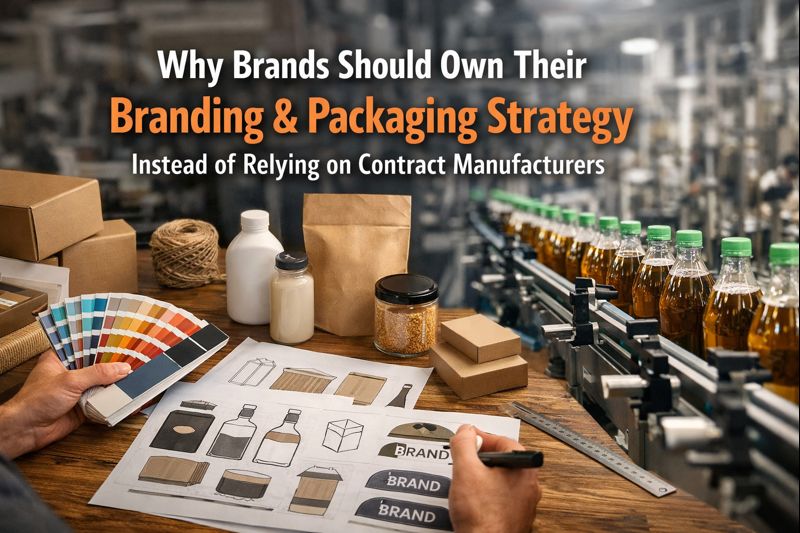
Many brands spend years building their product, refining formulations, and shaping their market positioning. Yet when it comes to packaging, one of the most visible parts of the brand, control is often handed over to contract manufacturers. This decision may seem convenient at first, but over time it can quietly weaken brand identity, consistency, and growth potential.
Owning your Branding & Packaging strategy is not about rejecting contract manufacturing. It is about understanding where manufacturing ends and brand responsibility begins. Packaging is not just a container, it is a brand asset.
Q.1 Is relying on contract manufacturers for branding and packaging a risk for growing brands?
Yes, relying entirely on contract manufacturers for branding and packaging often leads to loss of brand control, inconsistency, and reduced differentiation.
Branding defines how customers perceive a product. Packaging is where that perception becomes tangible. From the moment a customer sees a box on a shelf or receives it at their doorstep, packaging communicates quality, intent, and credibility.
When branding and packaging decisions are outsourced without strategic oversight, brands lose the ability to:
Strong Branding & Packaging ensures that every product presentation aligns with the brand’s promise.
Contract manufacturers excel at production efficiency. Their priorities typically include:
Brand storytelling, emotional appeal, and visual identity are usually not part of their core responsibility. When packaging decisions are left entirely to manufacturing partners, choices are often made based on availability and cost rather than brand value.
This does not mean contract manufacturers are wrong, it means branding decisions require a different focus.
When packaging is selected by different manufacturers or across multiple facilities, inconsistency becomes common. Colors, materials, finishes, and box structures may vary from batch to batch.
Customers notice these changes, even subconsciously. Inconsistent packaging weakens recognition and trust over time.
Many manufacturers rely on standard packaging formats. While functional, these solutions often look similar across brands.
Without brand-led packaging solutions, products risk blending into the background instead of standing out on shelves or online marketplaces.
Manufacturers may limit packaging choices to what is easiest to source or process. This can restrict access to:
Brands aiming for differentiation often require custom packaging that goes beyond standard options.
Packaging is often the first physical interaction a customer has with a brand. It shapes expectations before the product is even used.
Owning the packaging strategy allows brands to control:
These elements directly influence customer perception and loyalty.
As brands grow, their packaging needs evolve. New product lines, new markets, and new channels require adaptability.
A brand-led packaging strategy makes it easier to:
This flexibility is difficult to achieve when packaging decisions are fully dependent on manufacturers.
Standard packaging works for commodities. Brands, however, need differentiation.
Custom packaging allows brands to:
Custom packaging is not always about higher cost. When planned correctly, it reduces waste, damage, and long-term inefficiencies.
Folding cartons are one of the most widely used packaging formats across industries. When designed strategically, they offer both functional and branding advantages.
Brand-controlled folding cartons allow:
When manufacturers control carton selection, these advantages are often compromised for convenience.
Premium packaging is not limited to luxury brands. It applies to any brand that wants to communicate quality and trust.
Owning packaging strategy enables brands to explore:
Well-executed premium packaging strengthens brand credibility and supports higher perceived value.
Owning branding and packaging strategy does not mean excluding manufacturers from the process. Instead, it means setting clear boundaries.
A healthy approach includes:
This balance ensures efficiency without sacrificing identity.
Working directly with packaging specialists allows brands to focus on brand performance rather than production shortcuts.
Independent packaging partners help with:
These partners work in alignment with brand goals, not just manufacturing constraints.
Many brands view packaging as an expense to be minimized. In reality, packaging impacts:
Owning your Branding & Packaging strategy shifts the mindset from short-term cost savings to long-term brand equity.
Brands that want to grow sustainably must take ownership of how they are presented to the world. While contract manufacturers play a critical role in production, branding and packaging decisions require brand-led thinking.
By owning packaging strategy, brands gain control, consistency, and the ability to differentiate. Packaging becomes more than a container, it becomes a strategic asset that supports brand identity and long-term success. Contact Us for more information.
Because packaging directly impacts brand perception, consistency, and customer trust.
Yes, by defining clear packaging standards and working with dedicated packaging partners.
Not necessarily. Properly planned custom packaging often reduces waste and long-term costs.
They allow structural customization, consistent printing, and premium finishing options.
When scaling, entering new markets, launching new products, or facing consistency issues.