
09/01/2026




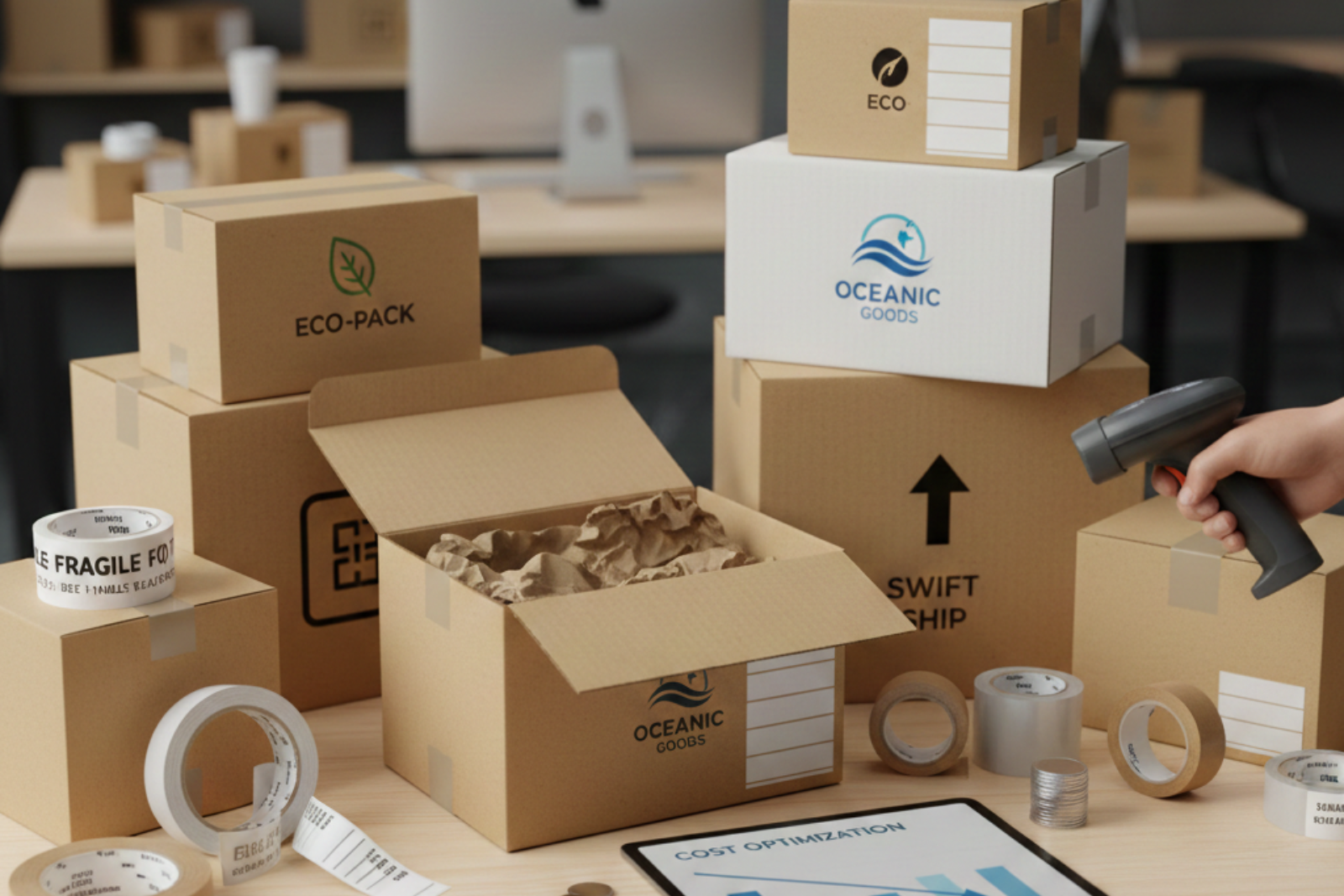
E-commerce packaging is no longer just about putting a product in a box. It plays a direct role in product safety, shipping efficiency, customer experience, and overall cost control. Brands that ignore packaging strategy often face higher return rates, damaged goods, and unnecessary logistics expenses.
This blog explains how custom packaging helps e-commerce businesses balance durability, sizing, labels, and cost, using practical insights based on real packaging challenges.
Q.1 Is custom packaging essential for reducing damage and cost issues in e-commerce shipping?
Yes, well-planned custom packaging significantly reduces product damage, optimizes shipping costs, and improves customer experience.
E-commerce products go through multiple handling stages, warehouses, courier hubs, last-mile delivery, and customer handling. Standard packaging often fails under these conditions.
Custom packaging allows brands to:
A strong packaging strategy supports both operational efficiency and brand perception.
Oversized boxes are one of the most common and costly mistakes in e-commerce. Extra space inside the box leads to:
A well-planned custom box design matches the product dimensions closely, minimizing movement and reducing the need for excess fillers.
Durability depends heavily on material choice. The wrong board thickness or structure can cause boxes to collapse during stacking or transit.
Key factors include:
Custom packaging allows brands to choose materials that provide strength without unnecessary overengineering.
Packages are stacked during storage and transport. If the box is not designed to handle vertical load, it may deform or crush.
Custom packaging solutions focus on:
E-commerce shipments often face humidity, rain, or temperature changes. Packaging materials must withstand these conditions without losing integrity.
Durability issues often arise when brands select materials based only on cost, ignoring real shipping environments.
Beyond logistics, custom label stickers support:
In e-commerce, labels often act as the first physical brand touchpoint with the customer.
Packages are frequently handled, slid, and stacked. Labels should resist:
Material and coating compatibility play a major role here.
More material does not always mean better protection. Over-packaging increases:
Custom packaging focuses on right-sizing, which reduces waste and optimizes cost.
Damaged products are expensive. Each return includes:
Durable custom packaging reduces breakage, which directly improves profitability.
While custom packaging may have a higher upfront cost than generic options, it often reduces long-term expenses by:
Cost control should be measured over the entire product lifecycle, not just per-box pricing.
Branding matters, but not at the expense of performance. Successful e-commerce packaging balances:
Elements like printed boxes, branded labels, and inserts should support the unboxing experience without compromising durability.
Experienced packaging partners help e-commerce brands:
Collaboration during the design stage prevents problems during large-scale fulfillment.
Custom packaging is not just about appearance, it’s a strategic tool for e-commerce success. By focusing on box design, label performance, durability, and cost control, brands can reduce losses, improve customer satisfaction, and scale operations efficiently.
The right custom packaging solution protects products, supports branding, and keeps logistics costs under control. Contact Us for more information.
Custom packaging improves product protection, reduces shipping costs, and enhances customer experience.
Yes, right-sized boxes reduce dimensional weight charges and minimize damage risks.
Yes, they support accurate shipping, branding, and compliance throughout the delivery process.
Poor label quality can cause scanning errors, delivery delays, and lost shipments.
Yes, when planned correctly, it reduces returns and long-term operational costs.